Why Serious Anglers Keep a Fishing Log
Every angler has that trip — the one where everything clicked. The weather was right, the water was right, the lure was right. You caught more fish in four hours than you had in the previous month combined. And then three weeks later, you can't quite remember what made it work.
Was it the overcast sky? The water temperature? The tide? That specific bend in the creek where the current slows down? You remember the fish. You remember the feeling. But the details — the ones that would let you repeat it — those are already fading.
This is why the most consistent anglers — tournament pros, guides, and serious recreational fishermen — keep a log.
Your Memory Is Good. Your Log Is Better.
Here's the uncomfortable truth about fishing memory: it's selective. We remember the big catches and the total blanks. We forget the mediocre Tuesdays that actually contain the most useful information — because those are the days where one small variable made the difference between a good trip and a great one.
A fishing log captures what your brain won't: the specific conditions that produced results. Over time, it becomes something more valuable than any fishing app or weather forecast — it becomes your database, built from your water, with your patterns.
Professional bass fishing guides estimate that keeping a detailed log improves catch rates by 20–30% over a single season. Not because the log makes you a better caster — but because it eliminates the guesswork about where to go, when to go, and what to throw.
The Patterns You Can't See Without Data
Fish are creatures of pattern. Water temperature, barometric pressure, moon phase, wind direction, water clarity — these variables repeat in cycles, and fish respond to them predictably. The problem is that no human brain can hold all of these variables simultaneously across dozens of trips.
A log can.
After one season of consistent logging, anglers typically discover things like:
- They catch significantly more fish during specific barometric pressure windows — usually in the 29.8–30.2 range, or during a falling barometer
- Certain lure colors outperform others by a wide margin at specific water temperatures
- Their best days almost always happen 24–48 hours after a cold front, not during it
- Morning bites on their home lake die at almost exactly the same time each month — corresponding to moon transit
None of this is obvious in the moment. It only becomes visible when you have 30, 50, or 100 entries to compare.
Why Paper Beats the Phone on the Water
There are plenty of digital fishing log apps. Some are quite good. But there's a reason paper logs have persisted for decades among serious anglers:
Durability. Phones don't love water, mud, fish slime, or direct sunlight. A journal in a dry bag or a truck console doesn't need charging, doesn't crack when it hits the deck, and doesn't auto-lock while your hands are covered in bait.
Speed. Flipping to the next blank page and scribbling conditions takes 30 seconds. Opening an app, navigating to the right screen, and tapping through fields takes longer — and on the water, every minute matters.
Spatial memory. There's cognitive science behind this: handwriting creates stronger memory encoding than typing. When you physically write "caught 4 largemouth on white spinnerbait at the south point," your brain stores that differently — and more durably — than tapping it into a phone.
No distractions. Opening your phone to log a catch means seeing notifications, texts, and emails. A journal keeps you on the water mentally, not just physically.
The Long Game
The real magic of a fishing log isn't in any single entry — it's in the accumulation. A log from your first season is interesting. A log spanning five seasons on the same body of water is a competitive advantage that no amount of YouTube research can replicate.
Tournament anglers who fish the same circuits year after year build libraries of regional data that inform their pre-fishing strategies. Guides use their logs to predict productive patterns for clients weeks in advance. And recreational anglers who keep logs simply catch more fish — because they stop repeating mistakes and start repeating successes.
"I've got eight years of logs on this lake. When someone asks me where to fish in October, I don't guess — I flip to October."
That's not talent. That's data.
Getting Started
The best fishing log is the one you'll actually use. Start simple: record every trip, even the short ones. The bad days are just as valuable as the good ones — maybe more so, because they tell you what doesn't work under specific conditions.
Don't overthink it. The habit matters more than the format in the first month. But once you've committed to logging, having a purpose-built journal — one that prompts you for the right information without requiring you to design your own system — makes the difference between a habit that sticks and one that fades by July. Our Elk Hunting Journal and other Cast & Cartridge Press logs are built on the same principle: structured fields for the data that matters most in the field.
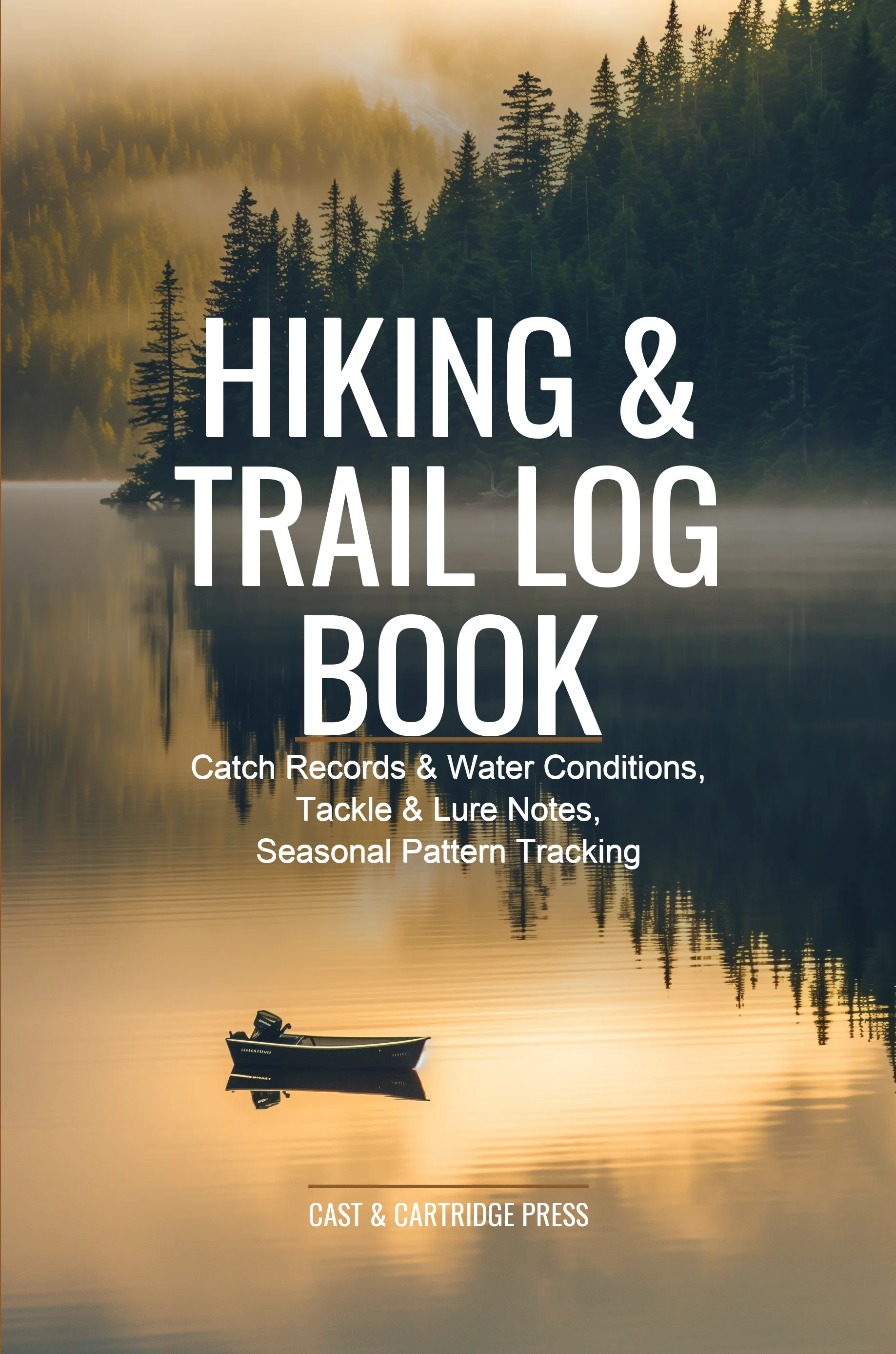
Fishing Log Book — Cast & Cartridge Press
Built for anglers who take their time on the water seriously. Structured entries, durable enough for the truck or the tackle bag, designed to build a personal fishing database one trip at a time.
View on Amazon →The Angler's Edge
Fishing will always have an element of luck. Weather changes, fish move, conditions surprise you. But the anglers who log consistently reduce the luck factor and increase the skill factor — trip by trip, season by season.
The fish don't read your log. But you do. And that's the point.