What to Bring to Chemo: The Complete First-Timer's Checklist
You're about to sit in that chair for the first time. Here's exactly what to pack so you can focus on what matters — getting through it.
Short answer: Bring a warm blanket, water bottle, light snacks, your medication list, insurance card, a journal to track symptoms and questions, headphones, a phone charger, and something comforting. Infusion sessions typically last 2–6 hours, so pack like you're settling in for a long afternoon.
The Comfort Essentials
The infusion room is usually cold. Hospitals keep them cool for clinical reasons, but you'll be sitting still for hours. These items make the difference between enduring and actually being okay:
- A soft blanket or throw — Hospital blankets are thin. Bring your own.
- Warm socks or slippers — Your feet will get cold first.
- A pillow — Especially if you tend to nap. The recliners aren't the worst, but they're not great.
- Lip balm — Chemo can dry you out fast. Your lips will thank you.
- Loose, comfortable clothing — Wear layers. Port-accessible tops if you have a port.
Food and Hydration
Your relationship with food is about to change. Not permanently, but during treatment, certain things will taste different. Start simple:
- A large water bottle — Hydration helps your body process the drugs. Sip constantly.
- Bland snacks — Crackers, pretzels, dry cereal, rice cakes. Nothing with a strong smell.
- Ginger candies or ginger tea — Ginger genuinely helps with nausea. This isn't folk medicine — it's evidence-based.
- A thermos of warm broth — Comforting and easy on the stomach.
- Peppermint — Peppermint tea or candies can help if smells become overwhelming.
Medical Documents
You'd be surprised how often you need these, and how hard it is to remember details when you're anxious:
- Insurance card and ID
- Complete medication list — Including supplements, vitamins, and OTC drugs.
- List of allergies
- Questions for your oncology team — Write them down before you go. You will forget them otherwise.
- A treatment journal — To record side effects, vitals, mood, energy levels, and what worked. This becomes invaluable by session three when your oncologist asks "how have you been feeling?"
Why a Treatment Journal Changes Everything
Here's what nobody tells you about chemo: by the second or third session, the days blur together. You can't remember which day the nausea hit, when you last had an appetite, or what you told the nurse about that rash.
A treatment journal gives you something you desperately need during cancer treatment: a record you can trust when your memory can't keep up.
The Cancer Treatment Journal by Wellside Press was designed specifically for this. It includes daily symptom trackers, medication logs, appointment notes, and space for the emotional processing that doesn't fit on a medical chart. It's 6×9 inches — small enough to toss in your chemo bag, big enough to write in comfortably.
Entertainment and Distraction
- Headphones — Noise-canceling if you have them. The infusion room has beeping machines.
- Phone charger / portable battery — Your phone is your lifeline to the outside world for several hours.
- A book, podcast, or downloaded shows — Wi-Fi in infusion centers can be spotty.
- A journal and pen — Some people find that writing during infusion helps process what's happening.
Emotional Support
- A support person — Most centers allow one companion. They can drive you home, take notes, and just be there.
- A comfort item — A photo, a small token, a letter. Something that reminds you why you're doing this.
- Your phone with your people on speed dial — Sometimes a quick text to someone who gets it is all you need.
What NOT to Bring
- Strong perfume or cologne — Your nose will be hypersensitive. Be kind to yourself and the others in the room.
- Heavy meals — Eat light before and during.
- Valuables you'd worry about — You may nap. Keep it simple.
- A rigid schedule for after — You won't know how you'll feel. Keep your afternoon free.
Frequently Asked Questions
What should I bring to my first chemo appointment?
Bring a warm blanket, water bottle, snacks, your medication list, insurance card, a journal or notebook to track symptoms, headphones, a phone charger, and a comfort item. Most infusion sessions last 2–6 hours, so plan for a long, quiet sit.
How long does a chemo session last?
Most chemotherapy infusion sessions last between 2 and 6 hours, depending on the treatment protocol. Some take as little as 30 minutes, while others can extend to 8 hours. Your oncology team will give you an estimated time before your first session.
Should I eat before chemo?
Yes, most oncologists recommend eating a light, bland meal 1–2 hours before chemo. Crackers, toast, bananas, and ginger tea are popular choices. Avoid heavy, greasy, or strongly flavored foods. Stay hydrated in the 24 hours before treatment.
Can I bring someone with me to chemo?
Most infusion centers allow one companion. Having a support person can help with driving, emotional comfort, and taking notes during conversations with your care team. Call your center ahead of time to confirm their guest policy.
Share this checklist
Help someone else walk in prepared.
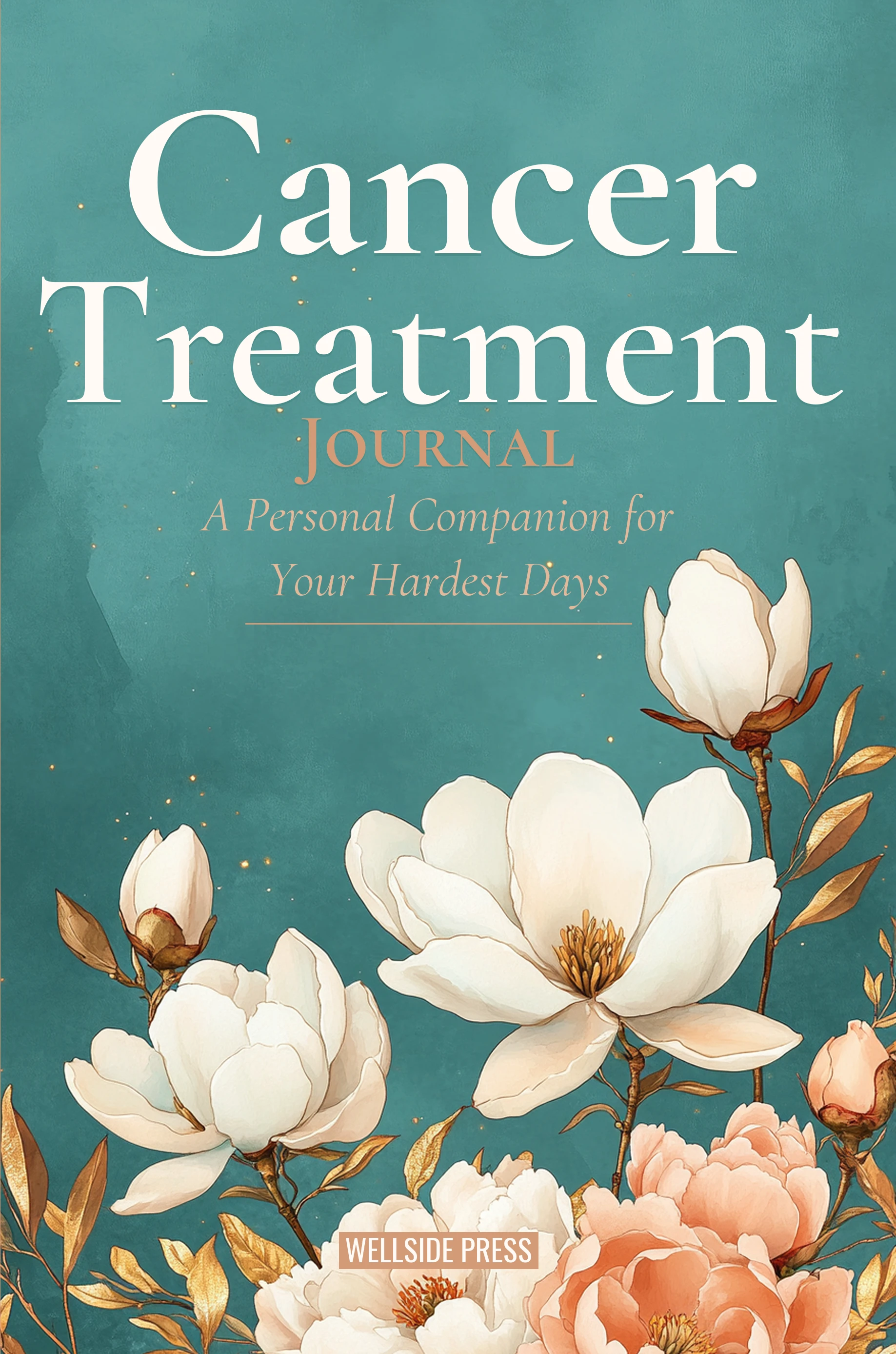
Cancer Treatment Journal — Wellside Press
Track every symptom, remember every detail. Daily symptom trackers, medication logs, appointment notes, and space for the thoughts that don't fit on a medical chart. 6×9 inches — fits in your chemo bag.
View on Amazon →