The Science Behind Journaling During Cancer Treatment
It's not just a feel-good suggestion. The National Cancer Institute, MD Anderson, and peer-reviewed research all point to the same thing: writing during treatment measurably helps.
Short answer: Yes, journaling during cancer treatment is evidence-based. The NCI recommends it as a coping strategy. Studies show it reduces anxiety, improves mood, strengthens doctor-patient communication through better symptom reporting, and may support immune function. It works through two mechanisms: emotional processing (expressive writing) and practical organization (symptom tracking).
What the Research Says
This isn't wellness fluff. Here's what the evidence actually shows:
- Reduced anxiety and depression. Multiple studies of cancer patients show that expressive writing — even 15-20 minutes a day — significantly reduces symptoms of anxiety and depression compared to control groups.
- Better symptom management. Patients who track symptoms daily report them more accurately to their care team, leading to faster medication adjustments and fewer ER visits.
- Improved immune markers. Research by James Pennebaker (University of Texas) found that expressive writing can improve immune function, including T-cell activity — directly relevant for patients whose immune systems are compromised by chemotherapy.
- Greater sense of control. Cancer strips away control. A journal gives some back. The act of organizing information, tracking patterns, and documenting your experience creates a sense of agency when everything else feels uncertain.
- Better appointment outcomes. Patients who bring written notes and symptom logs to appointments report higher satisfaction with their care and feel more heard by their oncologists.
Two Types of Journaling, Both Powerful
1. Expressive Writing (Emotional Processing)
This is writing about what you're feeling. Fear, anger, hope, grief, love, exhaustion — whatever is true in the moment. You don't need to be eloquent. You don't need to show anyone. The act of transferring thoughts from your head to paper reduces their cognitive and emotional weight.
The NCI specifically lists journaling as a recommended coping strategy alongside counseling, meditation, and support groups.
2. Symptom Tracking (Practical Organization)
This is the clinical side: daily ratings of nausea, fatigue, pain, appetite, sleep, mood. It turns your subjective experience into data your oncologist can act on.
The combination is more powerful than either alone. A journal that does both — structured daily trackers with space for open writing — gives you the practical tool and the emotional outlet in the same place.
Why Paper Beats Screens During Chemo
"Chemo brain" is the widely used term for the cognitive changes that happen during cancer treatment. Clinically it's called cancer-related cognitive impairment (CRCI), and it affects up to 75% of patients during treatment.
Symptoms include:
- Difficulty concentrating
- Short-term memory problems
- Trouble finding words
- Slower processing speed
- Difficulty multitasking
These symptoms make digital interfaces — apps with menus, logins, notification settings — genuinely harder to use. A paper journal meets you where your brain is: open, write, done. No friction, no cognitive load beyond the writing itself.
Neuroscience research also shows that handwriting engages different brain regions than typing. The motor act of forming letters activates memory encoding pathways — meaning you're more likely to remember what you wrote by hand than what you typed.
What to Write: A Starting Point
If you're staring at a blank page, start with these five things:
- How my body feels today (one sentence)
- My energy level (1-10)
- What I ate and whether it stayed down
- One thing I'm worried about
- One thing I'm grateful for
That's it. Five entries. Takes 3 minutes. Over a treatment cycle, those entries become a map of your experience that no one else could create.
Frequently Asked Questions
Does journaling actually help cancer patients?
Yes. The National Cancer Institute recommends journaling as a coping strategy. Research shows expressive writing reduces anxiety, improves mood, and may even strengthen immune function in cancer patients. Symptom tracking journals also improve communication with oncologists.
What should I write about in a cancer journal?
Track daily symptoms and severity, medications and side effects, questions for your doctor, emotional processing, energy levels, sleep quality, what you ate, and moments of gratitude or strength. A structured journal with prompts makes this easier than starting from a blank page.
Is a paper journal better than a phone app for cancer patients?
For many cancer patients, yes. Chemotherapy-related cognitive changes (chemo brain) make digital interfaces harder to navigate. A paper journal requires no battery, no passwords, no scrolling. The physical act of writing also engages different neural pathways than typing, which can aid memory and emotional processing.
Share the evidence
Help someone understand why this works.
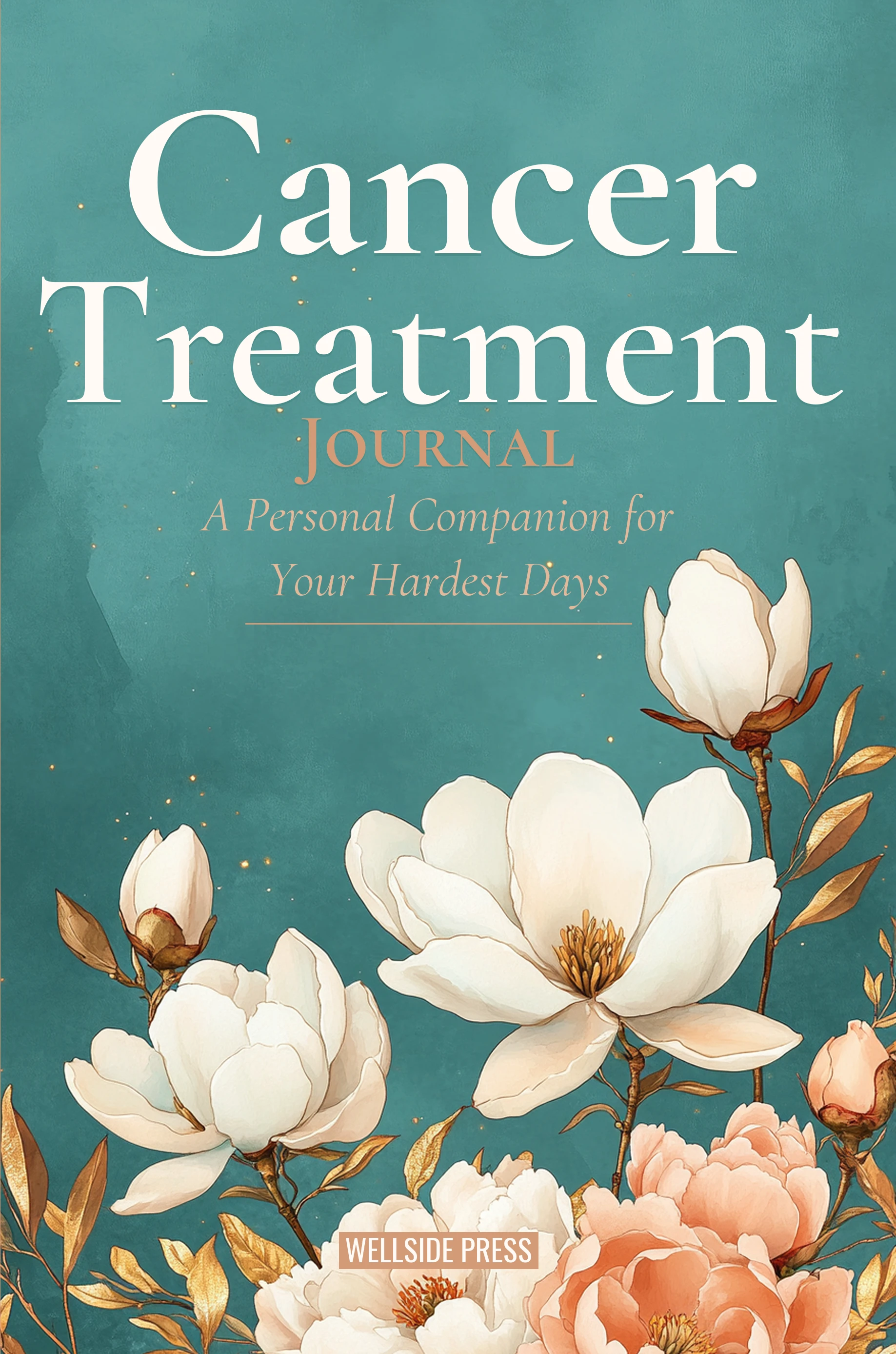
Cancer Treatment Journal — Wellside Press
Built for the brain going through chemo. Combines daily symptom trackers with space for emotional writing. Pre-formatted pages mean no blank-page anxiety. Designed for the brain that needs simplicity most.
View on Amazon →